The last mile of AI video.

Hyper Halo is an R&D lab building the tools that carry new imaging tech into professional post.

Demo video coming soon See Re:Sense

AI video arrives finished. Post needs it unfinished.

Generated shots ship as 8-bit 4:2:0 files with the look baked in. Push the grade and the image runs out of room.

  1. Banding256 values per channel run out under a hard grade.
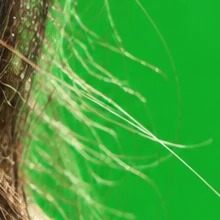
  2. SmearColor was stored at a quarter of the resolution.
  3. ClippingThe look is baked in. Highlights have nowhere to go.

Fig. 1A shot as a video model delivers it, graded harder as you scroll. Processed live; artifacts exaggerated for screen viewing.


Re:Sense Re:Sense

Re-masters AI-generated video into grade-ready log.

MP4 as deliveredRe:Sense log master
Applies the same contrast and saturation push to both sides.
Hover the scope to read values
Fig. 2The same shot on both sides, processed live, with scopes that read the frame as you change it. Push the grade: the MP4 breaks into steps and its histogram combs out, while the log side stays continuous. An illustration, not Re:Sense output.

What changes in the file.

Exposure
+1.0 stops
8-bit file
214 / 255
12-bit log
2,137 / 4,095
Moves the reading point along the exposure axis.
Fig. 3Sixteen stops of scene exposure, encoded two ways: an 8-bit display-referred file and a 12-bit log container. Move across the plot; the loupe shows the 8-bit steps.
  • 8-bit16-bit

    From 256 values per channel to 4,096 in ProRes 4444 XQ, and 16-bit half float in EXR.

  • 4:2:04:4:4

    Color written at full resolution, not a quarter of it.

  • DisplayLog

    Latitude to grade from, instead of a finished look.

True color science, not a filter.

Re:Sense is built on deterministic color science: fixed, inspectable math that returns the same master every time, from log all the way to an HDR deliverable.

Luminance map in nitsSDR peak 100 nits
Expands the shot from a 100-nit SDR range toward a 1,000-nit HDR range.

Frame above SDR white 0.0%

  1. 0
  2. 0.5
  3. 5
  4. 20
  5. 60
  6. 100
  7. 200
  8. 400
  9. 700+
Fig. 4The pit lane shot as a luminance map. Slide from SDR to HDR: mid-tones and skin hold their values while the highlights move into the new headroom. An illustration of the approach, not Re:Sense output.

Deterministic SDR to HDR

The SDR shot is expanded into HDR along a defined curve. Mid-tones and skin stay where the original grade put them, and highlights are mapped into the extra headroom. Same shot in, same HDR out, every time, with every step written to the shot report.

  • TransferPQ or HLG
  • StandardITU-R BT.2100
  • PQSMPTE ST 2084, absolute to 10,000 nits
  • HLGARIB STD-B67, relative to the display

Deliver in PQ or HLG

Pick the transfer per deliverable: PQ for HDR10-style mastering and streaming, HLG for broadcast pipelines that also need to play on SDR sets.

Fig. 5Both BT.2100 transfer functions. PQ maps signal to absolute light up to 10,000 nits; HLG is relative, drawn here for a 1,000-nit display.

From MP4 to the grade.

  1. MP4 in

    Whatever the model delivered: 8-bit, 4:2:0, with its look baked in.

  2. Look removed

    The baked contrast and color come off, so the grade starts from neutral.

  3. Re-mastered

    Written out as a ProRes 4444 XQ log master or a 16-bit EXR, with a report for the shot.

  4. Into the grade

    Your colorist takes it from there, with room to push.

Built for the suite, not the feed.

ProRes 4444 XQ and 16-bit EXR

Masters at the highest bit depth each format carries.

Deterministic

Same shot in, same master out. No AI model required at the core.

Sample report
ShotHH_DUSK_010
SourceH.264, 8-bit 4:2:0
MasterProRes 4444 XQ, log
AlsoEXR, 16-bit half
Baked lookRemoved
MetadataEmbedded

A report for every shot

Processing is logged per shot, and the metadata travels inside the file.

Cinema log targets

Output profiles for the log formats of major cinema cameras.

Close crop of hair strands against green screen with color stored at reduced resolution: the fine strands turn green.
4:2:0 source
The same crop with full-resolution color: the strands keep their warm hair color against the green.
4:4:4 master

Key-ready

Masters built with keying in mind, so edges have color to hold on to.

Runs on your workstation.

No compute fees.

Re:Sense is the first program out of the lab.

Hyper Halo builds last-mile tools where new imaging tech meets the delivery spec. Each one is proven with studio partners before it ships.

Patent pending.
  • Re:Sense, in studio trials
  • Unannounced, three programs
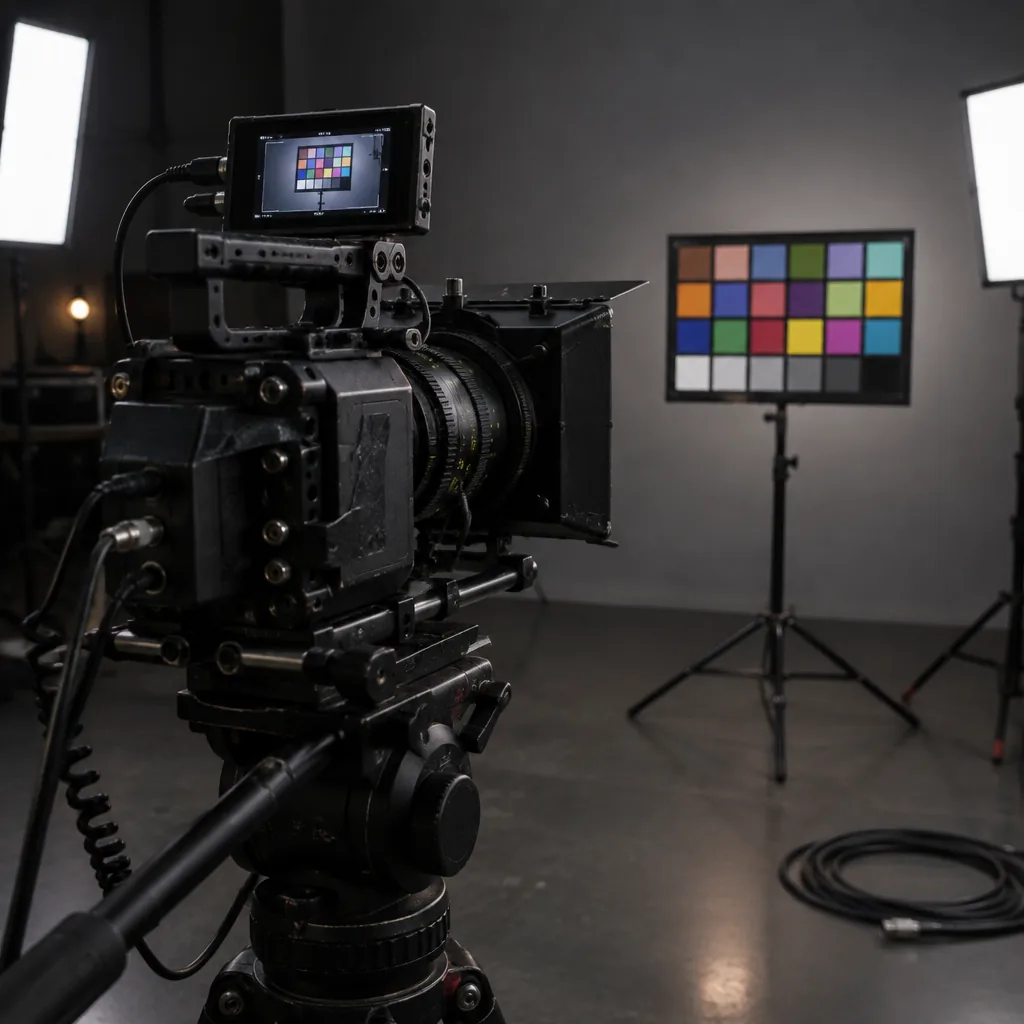
A cinema camera on a tripod in a dark test lab, aimed at a lit color chart.
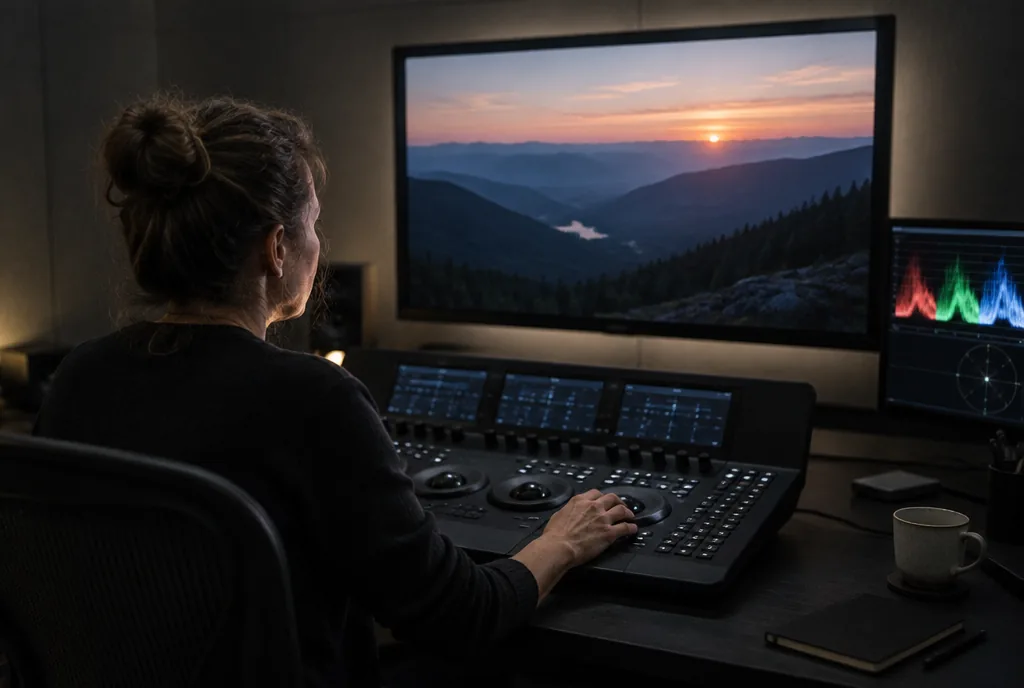
A colorist at a grading panel in a dark suite, working on a dusk mountain shot, with scopes on a second display.

Put it on your hardest shot.

Re:Sense is in trials with studios and post houses. Tell us about your pipeline and what you would test first.

Required